
Memories Matter
Featured blog Posts

READ THE LATEST POSTS

Tenement Museum tidbits
Under One Roof at NYC’s Tenement Museum is a must-see exhibit: First person testimony (and authentic furnishings) bring 3 families’ immigrant experiences to life.
Last week I had to be in Manhattan for a few business meetings, so I scheduled in a midday “appointment” to see an exhibit I had written about that piqued my interest: Under One Roof at New York City’s Tenement Museum.
While the museum’s original exhibits in the building at 97 Orchard Street highlight immigrant families who lived there between 1863 and 1935, the new installation down the block at 103 Orchard Street turns its attention to life in this Lower East Side neighborhood during the 1950s, 1960s, and 1970s.
Under One Roof
Over its 127 years as a residence, 103 Orchard Street housed more than 10,000 people. Under One Roof introduces us to three of them: Bella Epstein, Ramonita Saez, and Mrs. Wong.
The stories of these women and their families are told through the room interiors themselves, which are recreated in glorious authentic detail, from the crocheted doilies in Ramonita’s living room to the mezuzah affixed to the doorframes in the Esptein household. But it’s the first-person accounts of family members themselves that bring these immigrant experiences to life.
During the 90-minute tour we meet the families through their own testimony (short recorded audio clips and passed handouts with immigration records, photos, and other details), but these are mere glimpses. My amazing tour guide recounted the families’ experiences, always placing them in the broader historical context and framing a dialogue about the immigrant experience that continues to be of vital importance in our country.
As we were invited to take a seat on Ramonita’s plastic covered sofa and listen to some of the history of the neighborhood, it was inevitable that many of us would find moments of connection, and even consider how our own family stories contribute to our country’s ever-evolving identity.

The families of “Under One Roof” who lived at 103 Orchard Street, from left: Bella Epstein, pictured with her sister, Bluma, moved to the building in 1955; Ramonita Saez, who worked in a garment industry sweatshop and was a single mom of two sons, came in 1962; and Mrs. Wong, who moved to the Lower EastSide in 1968, still lives on the same block today.
Delving Deeper Into the Stories
Upon my return home, I discovered the rich website that does these families’ stories even greater justice. If you can make it to the Tenement Museum, I highly recommend Under One Roof or any of the amazing tours; if you can’t make it, though, do visit the site—and get lost in the textures and sounds and experiences of this not-so-distant time in our country’s history. You’ll discover oral history video clips, lots of photographs of the families and the downtown in which they resided, and plenty of food for thought.
Our individual stories are the stories of our country. We are history. Learning about the past through first-person experiences is the kind of “history” I wish I was taught in school alongside the dates and the textbooks. Bring your older kids to the museum to spark conversation and show them that history doesn’t have to be boring. Or consider sharing your own stories, and doing so with your kids—you just may be surprised how interested they are once the dialogue has begun!
Gift Shop Treasures
I’m one of those parents who tells my kid “no” to every gift shop tchotchke request, but I almost never say no to buying a book. This time around, I nabbed some books for my own memoir-obsessed self, along with a nice pen for him (he’s eight, and recently obsessed with writing in his journal—that’d be his Diary of a Wimpy Kid Journal, thank you very much ; )
Among my book recommendations:
A Tenement Story: The History of 97 Orchard and the Lower East Side Tenement Museum
Bintel Brief: Sixty Years of Letters from the Lower East Side to the “Jewish Daily Forward”
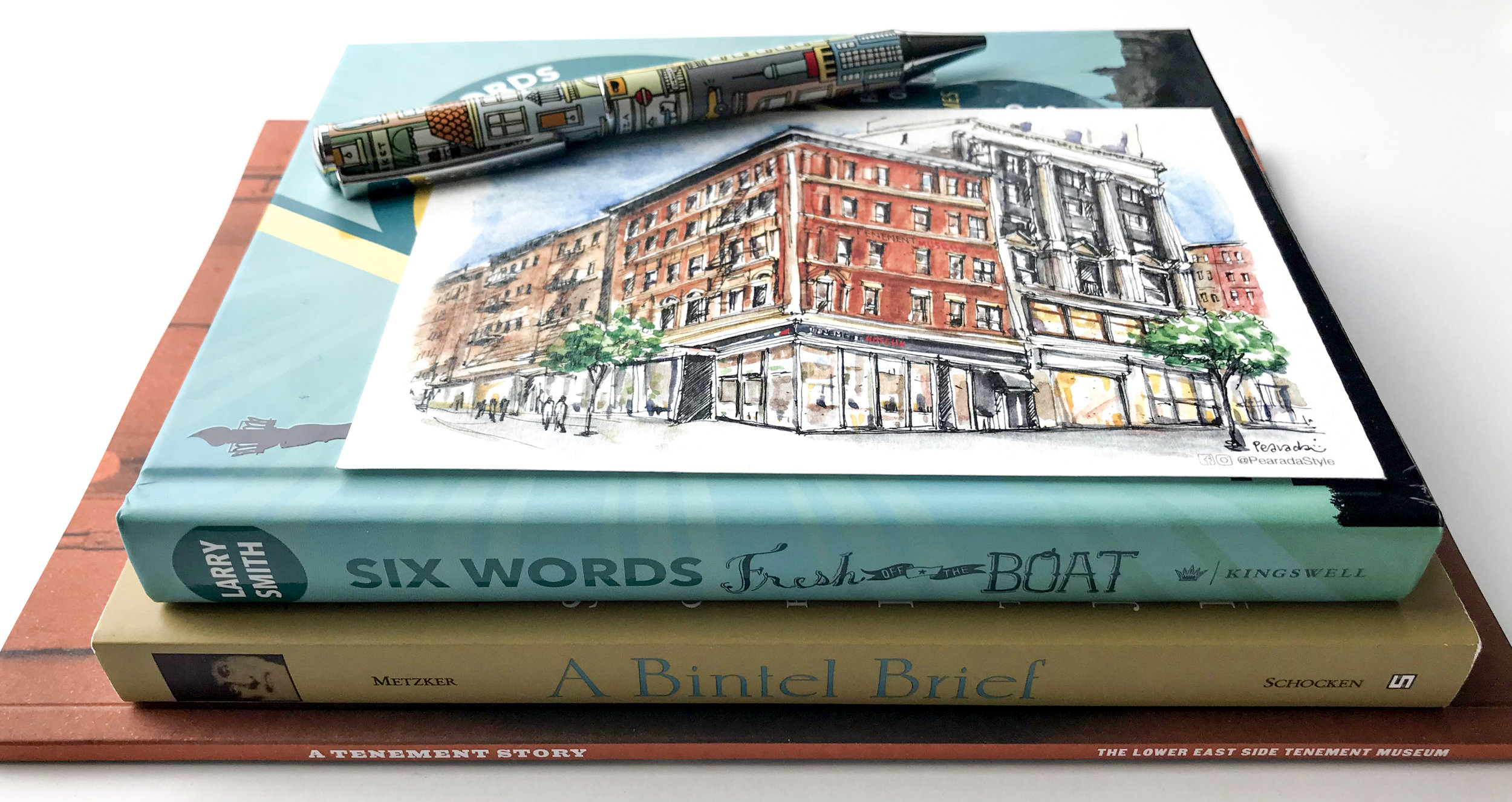
I will be finished with the Six Words book soon, simply because I can’t seem to put it down. It is uplifting and surprising, and when all of these (extremely) mini memoirs are stitched together, they create a diverse patchwork representative of “the American experience.”
For anyone who doubts that a six-word memoir can be powerful, check these out:
Daughter’s sweat equity paid son’s tuition. —Lisa Carlson
I no longer needed to whisper. —Hanni Gorenz Finaro
My mother: maid to mechanical engineer. —Jennifer Na
What would your six-word memoir be?
*Please note: I am in no way affiliated with the Tenement Museum, and this is an unsolicited review; I purchased tickets to the exhibit myself.

The quest for truth
In Tell the Truth, Beth Kephart offers up a wonderfully original series of memoir-writing prompts that encourage self-reflection & striving toward the universal.
In a previous post I recommended 5 books for autobiographical writing—books helpful to you even if you are not a writer, but you want to explore and record your life stories anyway.
As memoirist Beth Kephart writes, “Journal keeping, diary making, blogging—it’s all a curious thing, and it isn’t…memoir. But it’s a start, an inroad, a gesture.” And, in my opinion, an undertaking worthwhile in its own right.
Tell the Truth. Make It Matter.
Memory is an ever-changing, elusive thing. Jogging our memory to call forth stories may not be easy, but there are ways to make your memories more accessible—to probe and to explore and to revisit them in ways that tease out not just recollections, but strands of truth that connect us to the universal. Personal writing is never more powerful than when a reader sees himself in new—hopefully deeper—ways through the writer’s experiences.
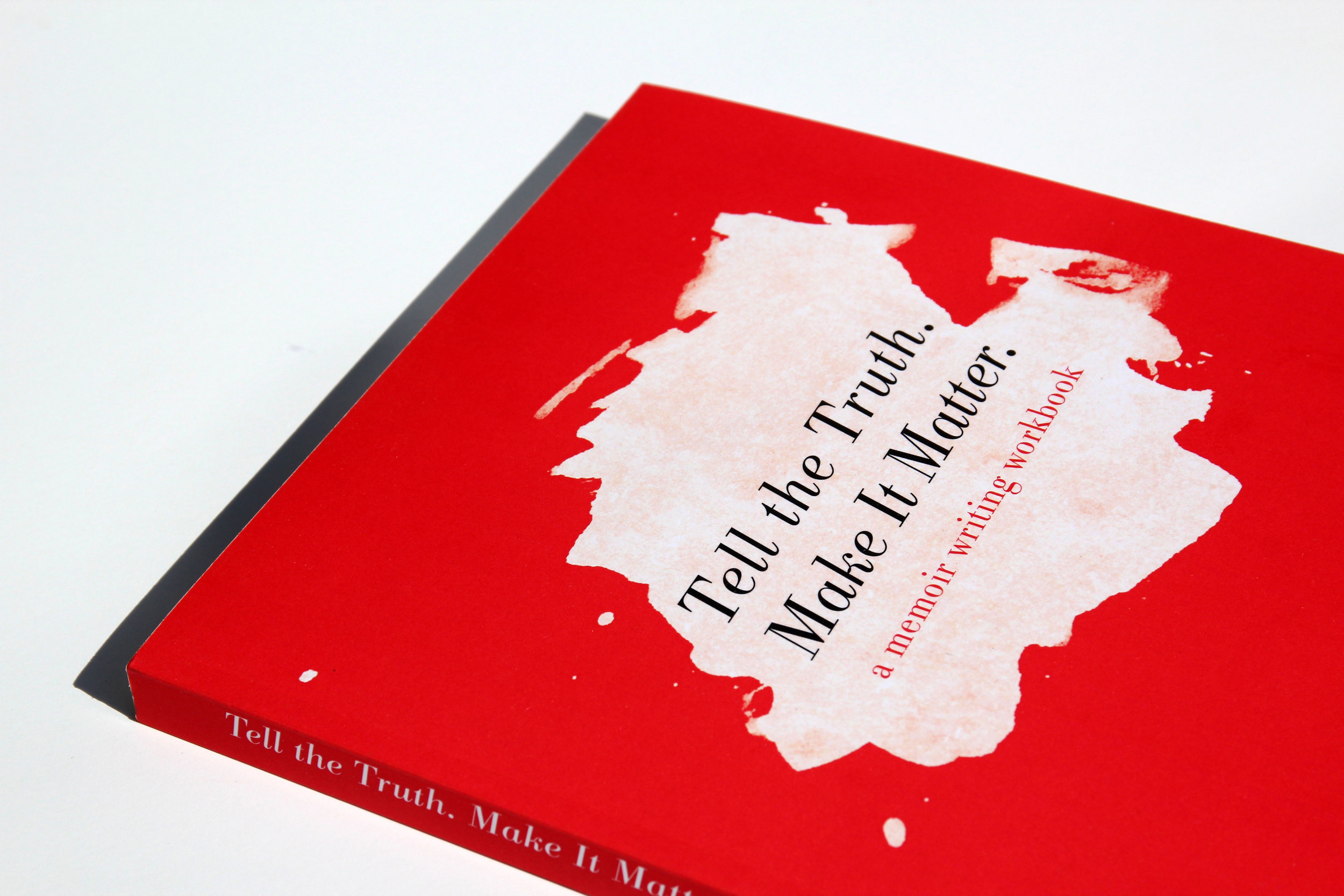
The greatest value in this workbook, in my opinion, is that it makes room for the truth. For your truth. For universal truths. It clears away the cobwebs of memory, sets your intention squarely in the direction of meaningful self-reflection, and encourages you to choose words that matter, too.
In Tell the Truth. Make It Matter (CreateSpace 2017, $18.95), National Book Award Finalist Beth Kephart encourages us to “move away from anecdote toward meaning,” to discover what matters most to you through the actual process of writing. Writing becomes an act of creating the self as much as creating memoir.
“Search for the truth, and write that truth, and you’re not just putting words on a page. You’re shaping your own sense of who you are and what you’re capable of.” —Beth Kephart
Tell the Truth is billed as “an illustrated memoir workbook created for those who write and teach memoir, those who recognize the power of truth in our everyday lives, and those who simply (though it is never simple) wish to remember.”
The prompts and exercises within are wonderfully original, expertly crafted (Kephart is, in fact, a seasoned memoirist and compassionate teacher), and simultaneously pointed and open-ended enough to have you furiously filling in those blank pages with purpose.
You are prompted to “tiptoe toward the writing of truth by writing a little bit of fiction,” to glimpse the truth through writing about objects and photographs and secrets, to write freely then build upon your thoughts, to experiment with language. Do you tend toward fine writing or plain prose? Either way, this workbook stretches you to try new approaches, and to understand which words have that “magnificent power to penetrate,” as Annie Dillard wrote.

Beth Kephart’s writing speaks to me on a visceral level; I luxuriate in her language, feel her words. Even in this workbook, where blank pages abound and words are spare, every word matters—hers (which will inspire) and yours (which I hope you will begin to put down on paper).
A small section of the book titled “On the Hunt for Memory” asks us to ponder how we remember—where do we go to find the past? In my work I often hear, “I don’t remember enough to share my stories.” Through guided reminiscence and conversational interviews, though, the stories and specificity of memories that emerge are often astounding. In this section of the workbook, Kephart offers a series of highly effective exercises for tapping into your memories, for rediscovering them as the raw materials for writing your life stories.
Life story writing of any kind is a journey, and Kephart recognizes that one workbook will not be your sole guiding force. “Your true story is a question waiting to be answered,” she writes.
Answer the questions in this workbook. Answer the questions in these unexpected resources. Most of all, answer the questions you write for yourself. What preoccupies you? What do you dream about? What probing conversations do you return to again and again around the dinner table over a bottle of wine?
Truth, Kephart says, “is a raw and quivering thing.” Are you ready to begin a journey to find—and write—your truth?
Tell us about your life story writing.
I would love to hear about your own journey towards writing your life. What are your biggest struggles? How do you access memory? Please comment below so we can keep the conversation going.

Related Reading
Read sample pages from Tell the Truth. Make It Matter. by Beth Kephart.
In need of inspiration? Read an excerpt from Beth Kephart’s book Still Love in Strange Places, and learn more about her memoir writing workshops.
“If not now, when?” What you can learn from Gloria Vanderbilt and Anderson Cooper.
Lots of food memories & family recipes passed down through generations? Consider making an heirloom book documenting those—but first, read from our Taste of the Past series for inspiration.
Note: This is an unsolicited review of a book I purchased at full price. I did not receive any compensation or free products in exchange, and the endorsements within this post are my own.

3 unexpected places to discover great life story questions
While there are lots of lists of family history questions on the web, here are 3 places to find unexpected questions that lead to meaningful life story writing.

There are abundant resources online and in libraries for family history questions. You know the kind I mean: checklists of all the possible questions you can ask the grandparents, military veterans, immigrants, distant cousins. One of my recent favorites is the #52Stories project from Family Search, which provides 52 prompts for capturing one brief story about your life every week, hopefully motivating you to begin shaping your family’s intergenerational narrative.
But if you’re in the market for more thought-provoking conversation starters—deeper questions that you can ask relatives or yourself on your journey of documenting your life stories—then we’ve got three unexpected resources for you. The questions included in these recommendations are often provocative, occasionally off the wall, and always open-ended to encourage a full, meaningful answer using the subject’s own experience and feelings.
The Best Questions Yield the Best Answers
If you select questions thoughtfully, you’re sure to get revealing answers. Whether you choose to use those answers to inform writing your own memoir, as episodic stories in a personal history book, or merely as a means of self-development or family bonding, you’re guaranteed to learn something new about yourself in the process!
1 - Gravitas: The Little Box of Big Questions
Gravitas is a powerhouse of thought-provoking questions. This parlor game of sorts engages “players” in conversation with questions that call for reflection yet can be dealt with in a thoughtful or a more lighthearted manner. While the goal of the game is ostensibly to declare a philosopher king of the occasion, the real value in this “Little Box of Big Questions” is to get everyone offering thoughts on life’s big questions as a way of discovering who we really are and how we have lived.

Here is a sampling of the prompts (there are 429 questions in the box), designed to spark meaningful conversation and profound insights.
What takes your breath away?
What is your gold standard for a good friend?
How do you ‘carpe diem’?
Describe the gap between life as you imagined it and life as it is.
How do you practice kindness?
When they say you have to work hard at love, what do they mean?
And a few less profound options to keep the banter flowing—questions that could as easily invite surprising insights and wisdom as they could a punchline:
If we are what we eat, who are you?
When does the fun stop?
What is the best thing you have ever found?
They say that Seinfeld is a TV series about nothing. Any ideas for an episode?
Who would you like to eavesdrop on?
2 - Know Yourself: Cards for Self-Exploration
This small box of 60 prompt cards is less about conversation with others, like the Gravitas questions above, but rather about conversation with oneself. They delve straight into big-picture, deep ideas and often read like prototypical “head shrink” questions—but when approached with an open mind and a truly self-aware lens, these prompts can undoubtedly help us understand ourselves better.
Some of the questions in the Know Yourself box are clearly intended for private introspection, such as “What things would deeply alarm your loved ones if they knew them about you?” and “What are you currently lying to certain people around you about?”

Many of them, though, are wonderful prescriptions for prolonged thought or writing assignments that will yield worthwhile insights:
When do you cry or want to cry (as an adult)?
What did you learn about relationships from your parents?
List everything you are worried about, from the very large to the very small.
And some, well, simply invite interesting answers:
What are you trying to say through your clothes?
If a really kind person wanted to praise me, they’d say… If a really tough person assessed me, they’d say…
Name three works of art (music, literature, and visual art/architecture) that mean a lot to you.
I recommend consulting these questions if you are an aspiring memoirist or avid journaler who wants to be challenged to explore who you are, or just a curious soul craving a gentle nudge towards deeper self-reflection.
The cards are produced by The School of Life, who bills itself as “a global organization dedicated to developing emotional intelligence [applying] psychology, philosophy, and culture to everyday life.” Visit their site for a treasure trove of resources to enlighten and entertain. And if you decide to check out their Confessions Game—“a series of questions around career, sex, money, relationships, family, gently inviting everyone to share important bits of themselves in an intimate and playful atmosphere”—please let me know what you think, particularly if the questions might be helpful for memory-keepers and life story writers, too!
3 - If… (Questions for the Game of Life)
Writing one’s life stories requires not just looking towards the past, but also looking towards the future. It is our hopes and dreams and the life we imagine for ourselves that define us as much as the paths we have already taken—and preserving those thoughts for future generations is a worthwhile endeavor.
“Fantasies are what inspire us all; to work, marry, raise families, create, improve our world…. We imagine in order to learn, to understand, to strive, to attempt, to predict, to avoid, to correct, to describe, to solve,” write the authors of If: (Questions for the Game of Life) (Villard 1995). As you may have guessed, every question in this book begins with the word “if.”

Perhaps some of these questions lean towards the cliché (there are plenty of the if-you-could-dine-with-anyone-from-history variety), but that in no way diminishes from their purpose: to spark your imagination, and to provide glimpses into your personality and life. It is their accessibility, and their ability to make you step outside your everyday worries, that make them worthwhile.
These are a few of the questions that, in my opinion, go beyond the expected and provide impetus for life-story writing or conversation geared toward meaningful reminiscence:
If your plane were about to crash and you had time to write one quick note, to whom would you write, and what would you say?
If you could, in retrospect, change one thing about your childhood, what would it be?
If you could discover that something you thought was true was actually false, what would you wish it to be?
If you could gain total memory of one year of your life so far, which year would you pick?
If is a book that can be tucked away in your car’s glove compartment to make long road trips bearable, or it is a book that can be stashed in your bedside stand for instant journaling inspiration.
And now, some questions for YOU.
What is the one question that you find always elicits interesting stories?
If you could have asked one question of a deceased family member, what would you have asked, and to whom?
What other sources of interesting questions are in your repertoire? Books, websites, podcasts?
Please share your thoughts in the comments below—I’d love to hear from you!
Related Reading:
Who Will Tell Your Life Story? It can be daunting to think of writing (or even telling!) your life story. So don’t. Start saving your stories, one at a time.
35 Questions to Ask to Prompt Memories of a Lost Loved One
How to Use Photographs as Prompts for Writing Life Stories

Google’s new app: Great way to preserve your old photos before they fade away
The new Google PhotoScan app allows users to digitally capture their old family photos with ease—and without glare. While the app isn't ideal for scanning high-resolution images for use in print, it has enormous value in quickly and effectively scanning those precious boxes of old family photos you—and your extended family members—have lying around your homes. See why it's a recommended download.

The new Google PhotoScan app allows users to digitally capture their old family photos with ease—and without glare.
Maybe you’ve got boxes or drawers full of old photographs you inherited from your parents. Or perhaps you have just a handful of cherished, dog-eared black-and-white pictures representing your entire family history. No matter how many of those old physical family photos you have, their quality is being eroded by the mere passage of time. With PhotoScan, Google has made preserving those pictures easier—and better—than ever.
The standalone app (available on iOS and Android), rolled out by Google on Tuesday along with added functionality to Google Photos, allows you to scan your printed photos in seconds, glare-free.
It’s as simple as placing your image on a flat surface and aiming your phone’s camera at the picture—you then capture four dots on your screen, kind of like a game. “Each time you capture one of those dots, the app is capturing an image of the print underneath,” said Julia Winn, a product manager for PhotoScan. “Then we take all those images, stack them on top of one another so that they are perfectly aligned, and throw out any pixels that are bright white and are not in common between the four images—those are glare.”
Machine learning technology also crops out the background, straightens uneven corners and photo edges, and does minor color enhancement to restore faded color—leaving you with a scan of the original that is significantly better quality than if you had taken a picture of it with your phone.
This is not a solution for family memory-keepers who want to eventually print family photos in a book or make enlargements to hang on the wall. Quality depends on the device used to perform the scan as well as the quality of the original, but it will never be sufficient for that kind of use. At a Google press event in Manhattan on Tuesday, I was impressed with the quality of printouts from scanned images, but note that they were all printed approximately the same size as the original photo.
PhotoScan, though, is the best option I have found for preserving a lot of old photographs quickly and sharing them easily. And that is something I urge everyone to do!
Since scanning photos with traditional scanners takes time, and since many people are reluctant to part with their photos temporarily to utilize a third-party digitizing service, risking loss and damage, too many people are doing nothing with their precious family photos. But those photos are indeed fading physically, not to mention fading from our memories as they sit neglected in that box.
Download the free Google PhotoScan app if you want to:
scan photos (even framed ones) at a relative’s home this Thanksgiving
easily get a stash of #ThrowbackThursday posts onto your phone
share childhood photos among siblings and extended family members easily
Google Photos has made sharing albums with anyone easier than ever.
One of the main draws of Google Photos as a primary photo management tool, in my opinion, is the functionality of its shared albums. Once you create an album, Google Photos allows you to invite friends via email, text message, or through Google Photos directly to add photos and caption information to the shared album. Your contacts are accessible through the app, and recipients receive notification and a link to the album via whatever contact method you choose.

Your contacts automatically load from your device into the Google Photos interface, making sharing across platforms simple.
So if you went to a graduation party or on vacation and five different individuals took photos, gather them all together in a shared album. Anyone who is invited can add photos, even if they are not a Google Photos user.
Why not create an album for different sides of your family, and begin creating a photo library of past generations? By inviting cousins and extended family members to contribute, you just might be surprised what photographic gems you’ll discover when they add pictures from their own collections!
Yes, PhotoScan is worthwhile even if you plan on having an heirloom book made.
While the scans from Google PhotoScan are not of a high enough quality for high-end print production, going through the exercise of gathering your family photos, identifying your favorites, and particularly inviting others to share their own snapshots with you, is a great first step in conceiving your book.
Some pictures might spark memories and elicit a favorite, once forgotten, family story.
Your great aunt Marilyn might scan in a photo of your mother in all her hippie splendor…or your father in his Catholic school uniform you’d never seen…or you at the age of one with that bowl haircut you forgot all about…
Beginning to catalog your family photos digitally will help an editor begin to see themes and understand what types of images she will have access to when creating your book (though you will need to gather originals for high-resolution scanning to occur for print purposes down the road).

There were various vintage cameras around the demo areas at Google's recent press event. Remember those cube-shaped flash bulbs for the Kodak Instamatic?
Conclusion?
Google PhotoScan is a must-download, free app that you will be glad to have on your phone the next time you come across an old family photo.
Whether or not you use Google Photos to organize your photo library, the PhotoScan app is a useful tool in your family history, genealogy, or memory-keeping arsenal.
Just don't forget: The resulting scans will not be suitable for enlarging prints or using in a high-end print book.

What you can learn from Gloria Vanderbilt & Anderson Cooper
You might be surprised to learn what Anderson Cooper calls “the most valuable year of my life.” It's the period when he and his mother Gloria Vanderbilt maintained an email correspondence that delved deep—into the feelings they had previously not spoken about, and into their experiences both shared and wholly individual. The back-and-forth format of questions and stories is engaging, and most meaningful in its sense of discovery, of a grown man coming to know his mother in wonderful new ways. Why not be inspired to follow in their conversational footsteps?

I recently finished reading The Rainbow Comes and Goes: A Mother and Son on Life, Love, and Loss (HarperCollins 2016) by Anderson Cooper and Gloria Vanderbilt. Do I recommend this book? Sure I do—it's chock full of details about these celebrities' lives, and in particular accounts of young Gloria's early years read like high fiction. But it's not the drama and inside scoop that endear this book to me; it's the naturally unfolding "getting-to-know-you" that happens between mother and son.
Cooper and his mother undertook an extended email conversation, one in which they were able to—finally—explore deep emotions and speak of tragedies of which they had previously chosen to remain silent. Vanderbilt's words are poetic, ripe with passion, honesty, and resilience. Cooper's questions are probing, and raw in their search for an understanding not only of his mother, but of the impact their relationship and experiences have had on him as a person.
“[Even as adults] we don’t often explore new ways of talking and conversing, and we put off discussing complex issues or raising difficult questions,” Cooper writes. “We think we’ll do it one day, in the future, but life gets in the way, and then it’s too late.”
“I didn’t want there to be anything left unsaid between my mother and me, so on her ninety-first birthday I decided to start a new kind of conversation with her, a conversation about her life. Not the mundane details, but the things that really matter, her experiences that I didn’t know about or fully understand....”
And what a gift these two gave to one another! Check this book out from the library, or better yet, buy it for yourself. I hope you may be inspired to embark upon your own extended conversation (theirs was via email over the course of a year) with a parent or other loved one.
“If not now, when?”
Why not...start an extended email conversation with your parents to discover the experiences that shaped them?
Anderson Cooper did. And it resulted in the most meaningful year of his life.

Of course you can open a wonderful dialogue with a loved one by writing good old-fashioned letters (and who doesn't love getting a hand-written letter!), but email is by far a more expedient way to communicate—and one that may be easier to turn into your own keepsake book later, should that idea appeal.
“The most valuable year of my life”
Not sure your mother or father would find such an exchange worthwhile? Perhaps give them the book. Or just bite the bullet and express your desire to get to know them better: Simply ask.
Vanderbilt was new to email at the time she began this endeavor with her son, but despite some initial reservations, her written correspondence matured and deepened over the course of the year they wrote to one another. And I can almost guarantee that once the floodgates are open—and each of you is able to see how deeply affected you are by the other's insights and memories—the richer the experience will become.
As Cooper writes:
“It’s the kind of conversation I think many parents and their grown children would like to have, and it has made this past year the most valuable of my life. By breaking down the walls of silence that existed between us, I have come to understand my mom and myself in ways I never imagined.
I know now that it’s never too late to change the relationship you have with someone important in your life: a parent, a child, a lover, a friend. All it takes is a willingness to be honest and to shed your old skin, to let go of the longstanding assumptions and slights you still cling to.”
I hope this book, or even just the idea of it, will encourage you to think about your own relationships and perhaps help you start a new kind of conversation with someone you love.
After all, if not now, when?

Books to help you write your family’s stories, even if you are not a writer
These books will help you write engagingly and concisely about your loved ones, yourself, or your family members, even if you don't call yourself a "writer."
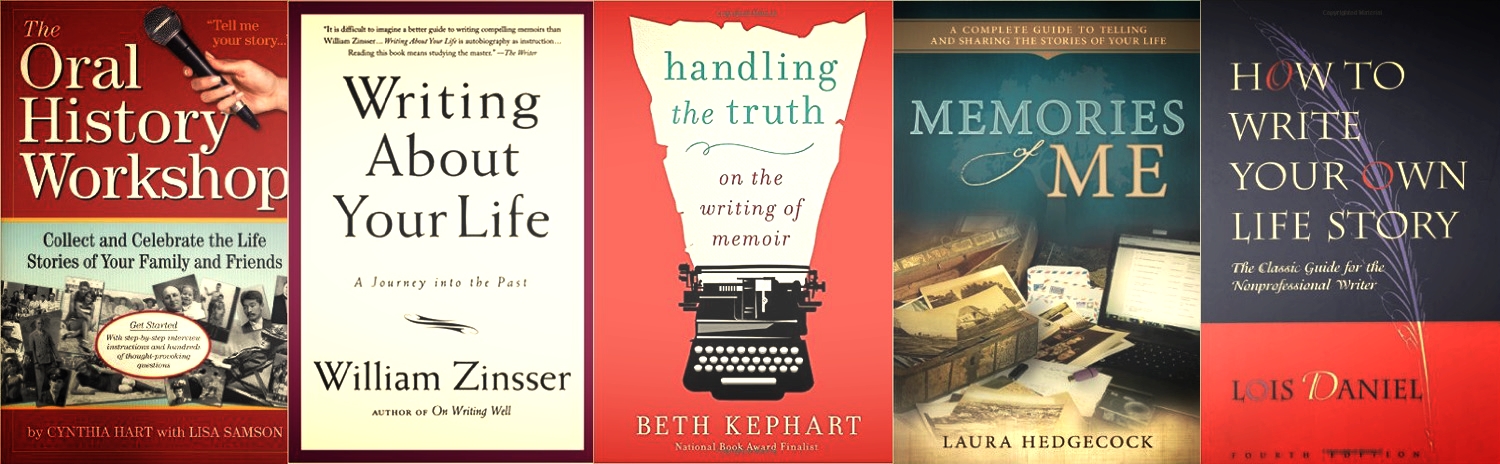
We all have stories within us. Eliciting those stories from family elders, or getting our own down on paper, though, is not always easy.
Here at Modern Heirloom Books, we do not strive to publish full biographies or memoirs; rather, we want to help you curate your family’s stories—through words and pictures—in a way that your children (and hopefully their children’s children) will want to interact with them. A book of family memories, after all, is worth nothing if no one connects with it. We most often use what is referred to as a quilt-work approach to storytelling: weaving vignettes and small narratives around photographs or other mementos that spark memory and serve as a touchstone to the past, carefully connecting them to a broader theme to create a textured picture of an individual.
We’re at your disposal: Some folks like to hand over a few boxes of photos and memorabilia, and guide the book-making process from afar.
Others prefer to do much of the heavy-lifting in terms of story gathering themselves. With that in mind, I have read piles of books that promise to help you write your family’s stories, and narrowed a long list down to a manageable 5 titles that we recommend. These are especially helpful for non-writers, but even for professional editors and wordsmiths, there is much wisdom to be gleaned specifically about writing about your own life and your family.
(Note: These are in no particular order!)
5 Top Book Titles for Autobiographical Writing, Reviewed
1 The Oral History Workshop
The Oral History Workshop: Collect and Celebrate the Life Stories of Your Family and Friends by Cynthia Hart with Lisa Samson (Workman 2009)
Once upon a time, a book such as this would not have been necessary, as the authors are quick to point out: “...when people lived in small, tight-knit communities, with or within a stone’s throw of their families. When stories, lore, and family history were essential parts of everyday life.” These days, not so much.
This book is concerned with an oral history, and as such doesn’t provide much in the way of writing help—so why include it? Well, it is the most complete source I have found for helping people prepare for interviews. And since your memory alone cannot convey an entire family’s stories (not to mention the fallibility of memory in general), interviewing loved ones may be the quickest and most accurate route to capturing what you want.
The Oral History Workshop lays out plenty of preliminary guidance, from technical aspects such as recording and archiving your interviews to ethical considerations including listening with compassion and sharing sensitive information. It even includes a chapter with basic ideas for, as the authors write, “turning your interviews into something more,” like scrapbooks and an inheritance for future generations.
It is the longest central chapter, though, entitled “Ask a Question, Gather a Story” that propels me to recommend this book to you. While interviews are highly personal endeavors, and each interviewee will have a unique past from which to draw stories, sometimes getting the ball rolling can be challenging. Hart and Samson provide an array of sample questions to inspire the reader. More than 800 questions are bulleted in 64 categories. And if that seems overwhelming, well, it can be—but the editors have been careful to make the chapter skimmable, and have included a sidebar, “The Terrific Twenty,” which lists 20 “all-around great questions” as a shortcut to getting started. I suggest tackling this chapter in the evening—you can even do so while watching some brainless TV show—and highlighting categories and questions that resonate (or do so on photocopies of the pages, with a set for each person you plan to interview).
You’ll of course want to focus on specific content for every individual—it’s virtually impossible to chronicle a person’s life from birth to retirement, yet of even greater importance is that doing so would bore your audience to death! Decide on a likely story arc before your interview, and choose questions accordingly. Just remember that, through attentive listening and thoughtful follow-up questions (think of your interview as a conversation, with one person doing most of the talking) you’re likely to get off course from your planned questions—as you should. As the authors write: “It’s possible that the interviewee has his own map for the interview, his own priorities and interests, his own list of things he wants to express…. Encourage him to talk about the things that matter so much to him. Don’t feel that you’ve gone astray by setting aside your questions and exploring uncharted territory.” See where the conversations lead, and be open to new directions.
Paperback, $10.55 at Amazon.
2 Writing about Your Life
Writing about Your Life: A Journey into the Past by William Zinsser (Marlowe 2004)
William Zinsser, who was a lifelong journalist, is most well-known for his landmark book On Writing Well, a mainstay resource for writers for generations. In this title, he focuses on memoir writing specifically, and does so with his typical eloquence and wisdom.
This book has two main premises:
One, don’t plan out your entire personal history; rather, let the stories take you on a journey. “Be ready to be surprised by the crazy, wonderful events that will come dancing out of your past when you stir the pot of memory. Embrace those long-lost visitors. If they shove aside some events you originally thought you wanted to write about, it’s because they have more vitality.”
“To write well about your life you only have to be true to yourself.”
And two: Think small. Zinsser wisely advises not to think about the “important” events in your life. Instead, write about “small, self-contained incidents that are still vivid in your memory.” These are likely the ones that contain a morsel of universal truth, that will resonate with readers. And they should not be 5,000 words. Brief stories told with meaningful details and palpable emotion are more evocative than lengthy treatises any day. One of my favorite tips: “Be content to tell your small portion of a larger story. Too short is always better than too long.”
Zinsser focuses on writing a memoir, and I imagine most of you who follow Modern Heirloom Books are not especially interested in completing a full biography. That doesn’t mean, though, that this book doesn’t contain sage words for you, as well, as it assuredly does. When writing scenes from your life—short stories that capture the essence of a person, a time, or a place—all the same memoir-driven lessons apply.
Indeed, Zinsser weaves what he refers to as “mini-memoirs” into this teaching book: Readers are taken along on a captivating journey through Zinsser’s own past while being given instructional notes along the way. The book is a pleasure-read with advice woven in, not a typical self-help book by any stretch.
Zinsser’s main message is clear and so on par with our own opinion here: “To write well about your life you only have to be true to yourself.” His demonstration of craftsmanship in this book will enhance your writing, and give you the tools to take pen to paper without fear. You’ll be inspired by Zinsser’s example (his words and stories are wonderful) as well as by his teaching.
Paperback, $12.43 at Amazon.
3 Handling the Truth
Handling the Truth: On the Writing of Memoir by Beth Kephart (Gotham Books, 2013)
I’ll state this upfront: This book is written for writers. Aspiring memoir writers, to be precise.
Why share this in this forum, then, you might ask? Because it is the book I wallowed in: I luxuriated in Kephart’s language, savored her insights, letting the lyricism and rhythms of the writing wash over me. Feel her words:
“Time is the memoirist’s salvation and sin. Time is the tease and the puzzle. Time is the trickster, the tormentor, the vexer. Time solved or resolved is memoir mostly mastered.”
While Kephart writes for writers, there is such value in immersing oneself in her attitudes about writing the self, about opening oneself to vulnerability, about the startle of details and discovering truth at the edge of the frame and the nature of love...all of this is wisdom even the non-writers among us will grasp at, cling to, think upon. And regarding love, take note: “Love,” she writes, “is where life stories start, no matter what one is writing about.”
Allow yourself to embark on this journey with Kephart. Just as reading biographical writing will inspire and inform your own life story practice, so too will reading Handling the Truth. For amidst the technical advice and deep dives into honing the meat of your memoir, this book weaves so many golden nuggets for you, too.
“Journal keeping, diary making, blogging—it’s all a curious thing, and it isn’t...memoir. But it’s a start, an inroad, a gesture.” Kephart spends a good portion of the book on what she calls “not-yet-writing-memoir work”—preparatory ideas, tapping memories, conjuring beauty, exploring diversions, finding your story. I am betting you will relish those parts. And in the relishing, there will be epiphanies that will make you see your life in new ways, write your life with your authentic voice.
One of my favorite gems from the book, I offer up as a call to action: “Let your words uncover you. Let your words prove you.”
Paperback, $13.29 at Amazon
4 How to Write Your Own Life Story
How to Write Your Own Life Story: The Classic Guide for the Nonprofessional Writer by Lois Daniel (Chicago Review Press, Fourth Edition 1997)
While the aforementioned two books were written largely with “writers” in mind, this next title was explicitly created to address non-writers, and it holds some key truths—and highly specific exercises—that may help you on your journey as a non-writer endeavoring to write your life story.
Written with a warm-hearted tone by a college professor, this book is built around 52 assignments, which parallel assignments Daniel used for years teaching inexperienced writers the craft of autobiographical writing. So if you were to write one assignment per week, theoretically you would have the raw material for your life story book in one year!
In a chapter entitled “Your Stories Don’t Actually Have To Be ‘Stories,’” Daniel provides a few examples of compelling pieces that might be considered essays rather than stories (which have a beginning, middle, and end). These composites of memories and ideas may be easier for many people to write, as they don’t have the pressure of conforming to traditional story structure, yet they are often equally revealing. She also encourages inclusion of “brief encounters,” snippets describing interesting encounters that occurred throughout a person’s life, giving your readers wonderful glimpses into your everyday life. Sometimes, short is sweet, and oh-so-evocative!
Daniel does not focus on polishing the writing (the final chapter does a shallow dive into how to approach revisions), focusing instead on how to efficiently and effectively record memories and start the process. Her assignments are akin to writing prompts, and what I find most helpful are the variety of examples of other students’ writing included throughout the book.
“I do believe that as a society we are emotionally undernourished in terms of understanding and feeling kinship with our heritage. Ours has been a society on a headlong dash into the future,” Daniel writes. “Consequently, unlike many older cultures which have been built on generations of traditions we have, to some extent, misplaced our past.”
"We have, to some extent, misplaced our past.”
We can help future generations have a meaningful link to their heritage by writing about our own lives and experiences—writing about the past, and writing “about today, which will be history tomorrow.”
Paperback, $13.59 at Amazon.
5 Memories of Me
Memories of Me: A Complete Guide to Telling and Sharing the Stories of Your Life by Laura Hedgecock (Plain Sight Publishing)
There’s a reason our first diaries come with a lock and key, notes Hedgecock: “For most of us, sharing our more vulnerable side—let alone our most personal thoughts and stories—does not come easily or naturally.” Of course, it’s precisely those personal stories that resonate and connect our loved ones to our journeys.
Hedgecock was inspired to write her book by a gift left to her by her grandmother: a spiral notebook filled with what she coined a “Treasure Chest of Memories,” writings that included stories about her childhood, recipes, nuggets of wisdom, and other heartfelt remembrances from her life.
In her book, formerly titled Treasure Chest of Memories: How to Capture and Share the Stories of Your Life, Hedgecock offers practical advice for novice memory keepers. Grounded in the world of scrapbooking, blogging, and social media, her tips do not merely cover writing and memory-jogging, but also span creative means of sharing your stories, whether in an old-fashioned journal or via more technologically savvy outlets, down to such nitty-gritty details as choosing an appealing and easy-to-read font and using photo-organizing software for digital images.
While Hedgecock does not offer as much guidance on the subtleties of strong writing (Kephart and Zinsser offer the most in terms of crafting lyrical prose and fine-tuning language), she goes much further in terms of rounding out family stories beyond the text. Her insights on using visual aids, including photographs, historical documents, and drawings; her out-of-the-box ideas for building a “treasure chest of memories,” including prayers, letters to loved ones, and even lists; and her heartfelt understanding of what an important journey the reader is undertaking, make this a perfect book for a non-writer who wants to leave a meaningful legacy behind.
Indeed, Hedgecock writes, “My goal is to assist you as you establish a rich endowment of memories, not to teach the art of writing.” And she does that with flair and enthusiasm, generously providing some psychological bolstering for those reluctant to write, as well as concrete tips for finding your voice and writing colloquially.
This book is available to buy in paperback, but I advise purchasing the e-book, which is not only cheaper but easier to navigate via search functionality and text highlighting capabilities.
E-book, $6.99 at Amazon.
Honorable Mention: To Our Children’s Children
To Our Children’s Children: Preserving Family Histories for Generations to Come by Bob Greene and D. G. Fulford (Doubleday 1993)
This compact book reminds me of the myriad memory journals found in bookstores today—the kind that prompt parents and grandparents to answer one question a day—only this book does not provide space to write those memories down. It is rather a companion to the writer, offering questions designed to open the doors to memory. “The particulars,” the authors say, are what your family will treasure most. Hear, hear!
Organized into thematic chapters, questions are easy to browse strategically (for example: High School; Holidays and Celebrations; Favorites; The House You Raised Your Family In), and the book is inviting enough to skim and quickly find a gem or two that appeals to your storytelling self (I loved, for instance, “Are you usually late or early?”, which prompted a number of telling and funny stories I would otherwise have forgotten all about!).
Hardcover, $17.19 at Amazon
You're on the road to reminiscing— and sharing your stories.
There are shelves of how-to books at your library about how to write—how to write better, how to write more clearly, how to write to persuade and sell, how to write to get published, how to write for marketing and SEO… None of those titles, however, will help you to write engagingly and concisely about your loved ones, yourself, or your family members. The books detailed above will hopefully put you on the road to reminiscence and retelling.
Be sure to follow us, as well, for an upcoming in-depth storytelling series on this blog with advice on: identifying the best family stories to tell; dealing with painful memories and stories about estranged family members; sparking your memory; interviewing techniques and tips; using photographs as prompts for life stories; and more.
No matter where you are in your storytelling process—if it’s just a flickering flame of an idea in your head or a fleshed-out drama written in journals for the past decade—we at Modern Heirloom Books are here to guide you along the process. Want to see what we can do together? Let’s create a legacy book that will become a family heirloom destined to be treasured for generations to come. Set up a consultation now!
Disclaimer: None of these books were provided to me. Before narrowing down this list, I frequented my local library a LOT, and ultimately purchased the five books I recommend via the reviews above. I hope you find a gem among them!
Dawn Roode’s curated roundup for the week of Sept. 23, 2026, is overflowing with recent reads on memoir, life story writing, and family history preservation.